
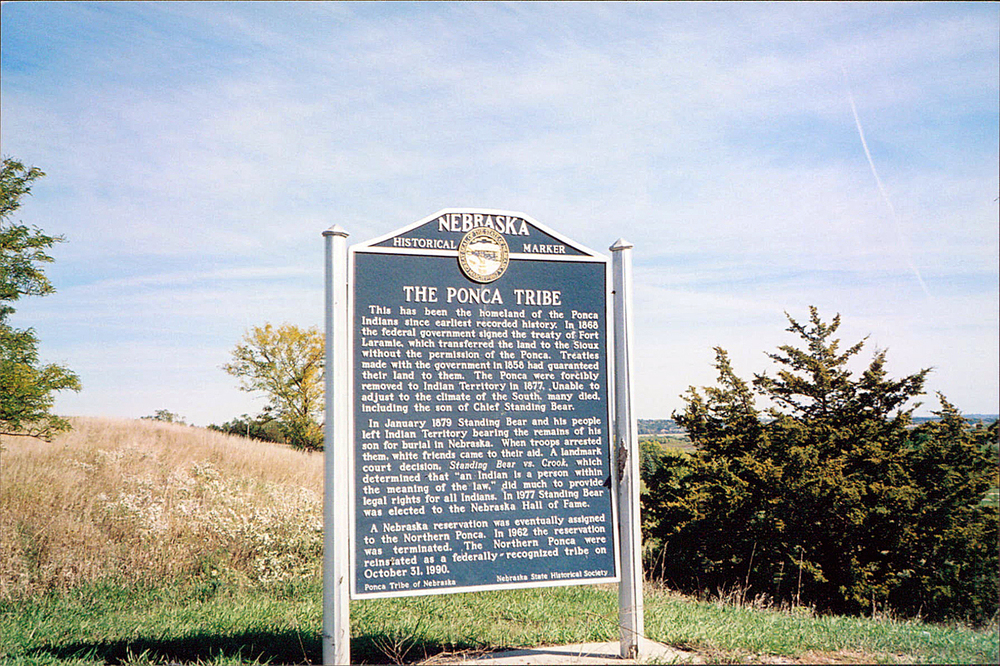
This has been the homeland of the Ponca Indians since earliest recorded history. In 1868, the federal government signed the Treaty of Fort Laramie which transferred the land to the Sioux without the permission of the Ponca. Treaties made with the government in 1858 had guaranteed their land to them. The Ponca were forcibly removed to Indian Territory in 1877. Unable to adjust to the climate of the South, many became ill and died. Among these was the son of Chief Standing Bear.
In January 1879, the chief and his small band left Indian Territory bearing the remains of his son for burial in Nebraska. When troops arrested the small band, white friends came to their aid. A landmark court decision, Standing Bear vs Crook, which determined that "an Indian is a person within the meaning of the law," did much to provide legal rights for all Indians. In 1977, Chief Standing Bear was elected to the Nebraska Hall of Fame.
A Nebraska reservation was eventually assigned to the Northern Ponca. In 1962 the reservation was terminated. The Northern Ponca were reinstated as a federally-recognized tribe on October 31, 1990.
Ponca Sites at Niobrara
The Ponca Tribe's agency grounds, museum, educational trail, powwow grounds and cemetery are together a few miles southwest of Niobrara, across the Niobrara River: take Highway 12 west over the river and turn south at the Ponca sign, across from Niobrara State Park.
- Ponca Tribal Museum
- Annual Ponca Tribe of Nebraska Powwow
- Ponka Tribal Cemetery
- Ponca Trail of Tears — the 1877 removal and where to visit today
- Chief Standing Bear Trail — the rail trail owned by the Ponca Tribe, Beatrice to the Kansas line
- Niobrara State Park and the Village of Niobrara