
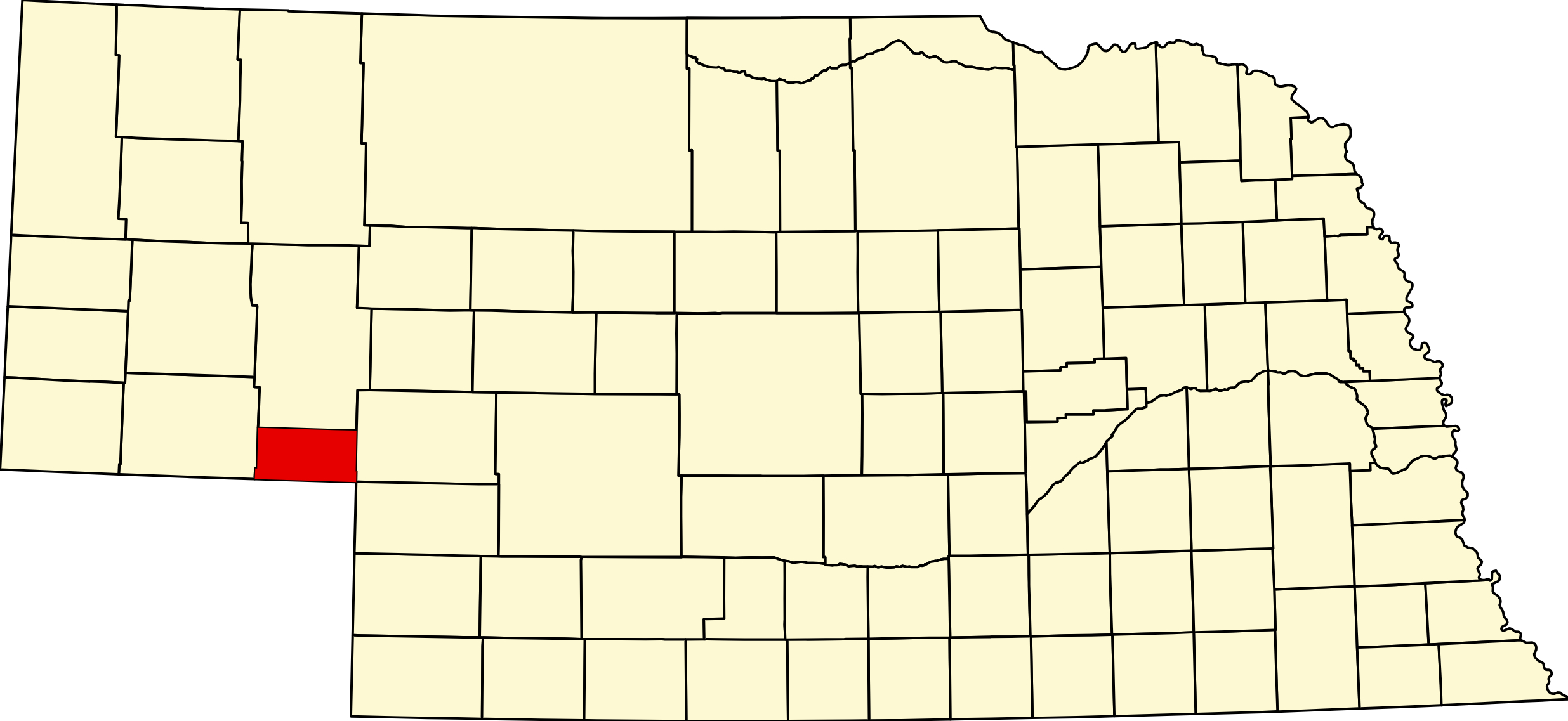
Towns in Deuel County Nebraska
Deuel County, Nebraska
County seat: Chappell · Created: November 6, 1888, from Cheyenne County; organized January 15, 1889 · Named for: Harry Porter Deuel, Omaha railroad man · License plates: prefix 78 · Population: 1,838 (2020 census); peak 3,992 in 1930 · Area: 441 sq mi · Time zone: Mountain
About Deuel County
Deuel County is the southeastern corner of the Nebraska Panhandle, a strip of tableland between Lodgepole Creek, which flows east past Chappell, and the South Platte, which crosses the southeast corner at Big Springs. The Pony Express ran up Lodgepole Creek in 1860–61, with its Nine Mile station just southeast of today's Chappell, and the Union Pacific built through in 1867. On September 18, 1877, Sam Bass and his gang robbed a Union Pacific express at Big Springs of about $60,000 in new gold coins. On November 6, 1888, Cheyenne County voters created four new counties, among them Deuel, named for Harry Porter Deuel (1836–1914), a pioneer Omaha steamboat and railroad agent who was the Union Pacific's city passenger agent there.
The first county election, on January 15, 1889, left no town with a majority, and Chappell became the temporary seat. In a special election that February, Big Springs precinct, with about 200 legal voters, returned more than 5,600 ballots; the Chappell Register charged that 1,300 ballots printed at Ogallala had been slipped in after the polls closed. After several more elections and a court case, Chappell was declared the county seat on August 11, 1894. In 1909 the northern three-quarters of the county became Garden County; the 1890 and 1900 census figures include that area. The population peaked at 3,992 in 1930. In 1961 Dick Cabela began selling fishing flies by mail from Chappell, the start of Cabela's.
Towns of Deuel County
Cities and villages
Chappell
The Deuel County seat, a city of 844 on Lodgepole Creek, US 30 and I-80 exit 85, where Dick Cabela began selling fishing flies by mail in 1961. A 1915 courthouse, the Sudman-Neumann Heritage House and a 9-hole golf course by Chappell Lake.
Big Springs
Village of 394 at I-80 exit 107, the last Nebraska stop before the I-76 split to Denver, named for the spring that watered Union Pacific engines. Sam Bass robbed a UP express here in 1877; the 1885 Phelps Hotel and the depot museum.
Former towns and post office communities
Barton
Union Pacific siding halfway between Big Springs and Julesburg, Colorado, beside the I-80/I-76 split; a station by 1882 that never had its own post office.
Day
Homestead settlement and post office (1890–1903) about 9 mi north of Big Springs on Day Road; its only surviving building is the 1886 Waterman Sod House, on the National Register.
Travel Corridors
I-80 — across the county, with exits at Chappell and US 385 (85), NE 27 north toward Oshkosh (95), US 138 to Big Springs and Julesburg, Colorado (101), the I-76 split for Denver (102) and Big Springs (107). I-80 Corridor →
US 30 — the Lincoln Highway, along the Union Pacific through Chappell and north of Big Springs. US 30 Corridor →
Other highways — US 385 from Julesburg, Colorado, to Chappell, then west with US 30; US 138 from Julesburg through Big Springs to US 30; NE 27 north from exit 95 to Oshkosh.
Cameras: View Deuel County cameras → · Road conditions: Nebraska 511
Things to See
In Chappell, the 1915 Deuel County Courthouse, the Sudman-Neumann Heritage House and the Pony Express and bomber-crash markers at Pony Express Park. In Big Springs, the 1885 Phelps Hotel, the depot museum and the Sam Bass robbery marker in Eiker Park; north of town, the 1886 Waterman Sod House. The county has five National Register listings. South of Big Springs, Colorado's northeast corner is marked where Deuel, Keith, Perkins and Sedgwick counties meet.
Outdoors
Deuel County has no state park or recreation area. The South Platte NRD keeps two small wildlife areas open to public hunting: Goldenrod (97 acres, near Chappell) and Goldeneye (23 acres, with a fishing pond, west of Big Springs). Chappell Lake has fishing and disc golf beside the Chappell Golf Club. RV parks: Creekside in Chappell and McGreer Camper Park at Big Springs. Lake McConaughy is about 25 miles northeast in Keith County.
Deuel County Business Directory
Businesses within 20 miles of: Chappell · Big Springs · All listings →
Adjacent Counties
Garden County (north) · Keith County (east) · Perkins County (southeast, at a single corner point) · Sedgwick County, Colorado (south) · Cheyenne County (west).
Events
2026 dates: the Deuel County Fair in Chappell, August 12–15, with 4-H and FFA livestock shows and the livestock sale; the Chappell pool opens June 1; the Big Springs depot museum is open daily in summer.
Events in Deuel County
- Deuel County Fair (Chappell)
County fair in Chappell, August 12–15, 2026: 4-H and FFA livestock shows and sale.
Know of another event in the county? Tell us about it.
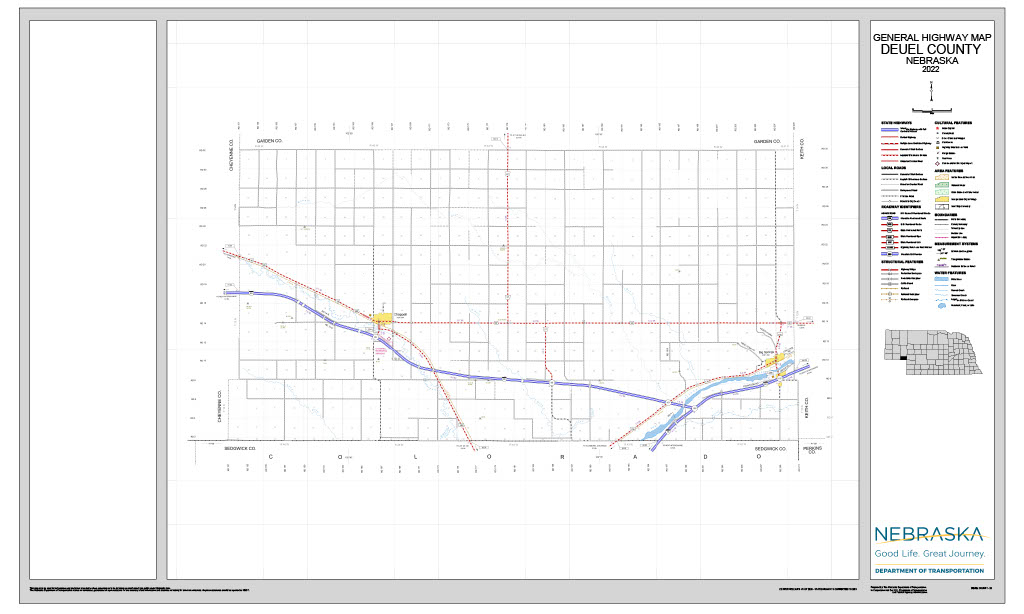
Deuel County at a Glance
Deuel County, Nebraska — the southeast corner of the Panhandle, on I-80 where I-76 splits off for Denver. County seat Chappell; Mountain Time.
Getting there: I-80 and US 30 across the county; US 385 and US 138 from Julesburg, Colorado; NE 27 from Oshkosh.
For visitors: the courthouse and Heritage House in Chappell, where Cabela's began; the Phelps Hotel, depot museum and Sam Bass robbery marker in Big Springs; the Waterman Sod House. Nearest hospitals: Julesburg, Colorado, and Sidney.
Vehicles registered in Deuel County carry license plate number 78. See what every Nebraska county number means.
Deuel County Businesses & Places
131 listings in Deuel County.
Click a category to see the businesses.
Eat & Drink (6)
- Big Springs Saloon — Bar & Grill, Big Springs
- Buffalo Creek Coffee — Cafe / Coffee Shop, Chappell
- Max's Hi-Way Diner — Diner / Family Restaurant, Big Springs
- Rusty Bucket — Restaurant, Chappell
- Subway – 109 Circle Rd, Big Springs — Subway, Big Springs
- Toots' Bar & Grill — Bar & Grill, Chappell
Stay (2)
- Motel 6 Big Springs — Motel, Big Springs
- Phelps Hotel — Hotel, Big Springs
Outdoors & Recreation (7)
- Chappell Golf Club — Golf Course, Chappell
- Chappell Lake Disc Golf Course — Disc Golf Course, Chappell
- Creekside RV Park — Campgrounds & RV Parks, Chappell
- Goldeneye Wildlife Management Area — Public Hunting Areas & WMAs, Big Springs
- Goldenrod Wildlife Management Area — Public Hunting Areas & WMAs, Chappell
- McGreer Camper Park — Campgrounds & RV Parks, Big Springs
- The Bunkhouse B&B and Stables — Campgrounds & RV Parks, Big Springs
Places to Visit (6)
- Big Springs Depot Museum and Veterans Memorial — History & Heritage Museums, Big Springs
- Chappell Lake — Attraction, Chappell
- Pony Express Park Historical Markers — Historic Marker, Chappell
- Sam Bass Robbery and Eiker Park Historical Markers — Historic Marker, Big Springs
- Sudman-Neumann Heritage House (Chappell Museum Association) — History & Heritage Museums, Chappell
- Wallace W. Waterman Sod House — Attraction, Big Springs
Events & Venues (4)
- Burgie's Bowling — Bowling Alley, Chappell
- Chappell Swimming Pool — Swimming Pool, Chappell
- Deuel County Fair — County Fair, Chappell
- Deuel County Fairgrounds — Fairground, Chappell
Health & Emergency (2)
- Chappell Family Dentistry — Dentist & Dental Office, Chappell
- The Valley Medical Clinic of Chappell — Medical Clinic, Chappell
Shopping & Gifts (4)
- Beulah's Emporium — Variety Store, Chappell
- Chappell Super Foods — Grocery, Chappell
- Neti's Treasures — Variety Store, Chappell
- Our Lavender Co. — Gift shop, Big Springs
Government & Resources (21)
- Big Springs Chamber of Commerce — Chamber of Commerce, Big Springs
- Big Springs Public Library — Libraries, Big Springs
- Big Springs Village Office — City Hall, Big Springs
- Chappell Chamber of Commerce — Chamber of Commerce, Chappell
- Chappell City Hall — City Hall, Chappell
- Chappell Food Pantry — Food Pantry, Chappell
- Chappell Housing Authority — Housing Authority, Chappell
- Chappell Memorial Library & Art Gallery — Libraries, Chappell
- Chappell Post Office — Post Office, Chappell
- Chappell Senior Citizen Center — Senior Citizen Center, Chappell
- Deuel County Assessor — County Assessor, Chappell
- Deuel County Attorney's Office — County Attorney, Chappell
- Deuel County Clerk — County Clerk, Chappell
- Deuel County Court — County Court, Chappell
- Deuel County Courthouse — Court House, Chappell
- Deuel County Driver License Office — County Driver License, Chappell
- Deuel County Emergency Management — Emergency Management, Chappell
- Deuel County Sheriff — County Sheriff, Chappell
- Deuel County Treasurer — County Treasurer, Chappell
- Deuel County Veterans Service Office — Veterans Office, Chappell
- Deuel County Weed Superintendent — County Weed Control, Chappell
Community & Faith (13)
- Assembly of God — Pentecostal, Big Springs
- Assembly of God — Pentecostal, Chappell
- Berea Lutheran Cemetery — Chappell — Cemeteries, Chappell
- Berea Lutheran Church — Lutheran Church, Chappell
- Big Springs Cemetery — Big Springs — Cemeteries, Big Springs
- Big Springs, NE UMC — Methodist Church, Big Springs
- Chappell Cemetery — Chappell — Cemeteries, Chappell
- Day Cemetery — Big Springs — Cemeteries, Big Springs
- Grace Lutheran Church — Lutheran Church, Chappell
- Mennonite Cemetery — Chappell — Cemeteries, Chappell
- Saint Joseph’s Catholic Cemetery — Chappell — Cemeteries, Chappell
- St. Joseph Catholic Church Chappell — Catholic Church, Chappell
- Zion Cemetery — Big Springs — Cemeteries, Big Springs
Trades & Construction (13)
- Barry Walker Construction — General Contractor, Big Springs
- Bob's Welding — Welding & Fabrication, Chappell
- Boondock Designs — Screen Printing Shop, Chappell
- Chappell Lumber — Lumber, Chappell
- Chappell Plumbing — General Plumbing, Chappell
- Doug Mick Construction — General Contractor, Chappell
- Howitt's Woodworking — Woodworking, Chappell
- Jeppson Services — Concrete and Flatwork Contractor, Chappell
- Kenfield Electric — Electrical, Big Springs
- Landis Plumbing — General Plumbing, Big Springs
- Randy Schlake Construction — General Contractor, Big Springs
- Reichman Construction — General Contractor, Chappell
- Victor & Victor Construction — General Contractor, Chappell
Professional Services (10)
- Adams Bank & Trust — Banking, Chappell
- BigIron Auctions - Chappell — Auction Service, Chappell
- D-T Tech Service — Technology, Big Springs
- Farm Bureau Insurance - Chappell — Insurance, Chappell
- Federal Crop Agency — Insurance, Chappell
- Jack Nerud Realty — Real Estate Agency, Chappell
- Little Town Storage — Self-Storage Facility, Big Springs
- Lone Tree Storage — Self-Storage Facility, Big Springs
- Plummers Insurance - Chappell — Insurance, Chappell
- Points West Community Bank — Banking, Chappell
Automotive (9)
- Big Springs Tire & Auto Repair LLC — Auto Repair, Big Springs
- Big Springs Truck & Travel — Fuel & Gas Station, Big Springs
- Boss Truck Shop — Truck Repair Shop, Big Springs
- CarQuest Premier Auto Service — Auto Parts, Chappell
- Flying J / Pilot Travel Center — Fuel & Gas Station, Big Springs
- Hansen's Dino Mart — Fuel & Gas Station, Chappell
- Maverik — Maverik, Big Springs
- Pump & Pantry - Chappell — Pump & Pantry, Chappell
- Ron's Chappell Auto Repair — Auto Repair, Chappell
Education (8)
- Creek Valley Elementary School — Elementary & Middle School, Chappell
- Creek Valley High School — High School, Chappell
- Creek Valley Middle School — Elementary & Middle School, Chappell
- Creek Valley Public Schools — School District (K-12 / General), Chappell
- So Platte Elem at Big Springs — Elementary & Middle School, Big Springs
- South Platte High School — High School, Big Springs
- South Platte Public Schools — School District (K-12 / General), Big Springs
- University of Nebraska Extension — County Extension Office, Chappell
Personal Services (7)
- A Shearly Unique Salon — Beauty Salon, Big Springs
- Adopt-A-Dog Animal Rescue - Chappell — Animal Shelter, Chappell
- Appearance Salon — Beauty Salon, Chappell
- Bondegard-Holechek Funeral Home — Funeral Home, Chappell
- Creek Valley Early Learning/Day Care — Day Care Center, Chappell
- Jenny Reichman Photography — Photographer, Chappell
- Sherry Lutz Photography — Photographer, Chappell
Agriculture & Farm (7)
- Ag Valley Co-op Elevator — Grain Elevator, Big Springs
- Armstrong Irrigation & Diesel Repair — Farm Equipment Repair, Big Springs
- Big Springs Equipment — Equipment Dealers, Big Springs
- Chappell Feedlot — Feed Yard, Chappell
- Frenchman Valley Coop — Farm Coop, Chappell
- Hixon Ag — Ag Consulting & Custom Services, Chappell
- McClung Aerial Spraying — Seed, Chemical & Agronomy Services, Big Springs
Manufacturing & Industrial (6)
- Ham Trucking — Trucking Company, Big Springs
- Harms Trucking — Trucking Company, Chappell
- Hodges Metal Works — Metal Finisher, Chappell
- Ortega Trucking — Trucking Company, Big Springs
- Riley Trucking — Trucking Company, Chappell
- Vic's Trucking — Trucking Company, Big Springs
Utilities (2)
- Chappell Municipal Utilities — Electric Power Provider, Chappell
- Village of Big Springs — Water Utility / District, Big Springs
Land & Property Services (2)
- Hodges Irrigation & Landscaping — Landscape Design & Installation, Chappell
- Jeppson Services — Land Clearing & Brush Removal, Chappell
Transportation (1)
- Billy G. Ray Field — Chappell — Municipal / General Aviation Airport, Chappell
Media (1)
- Chappell Register — News Paper, Chappell
Home Improvement & Repair (1)
- Spray Foam Oilfield Insulators — Insulation & Drywall, Chappell